Dental prosthesis

We are still accepting new patients! 

Dental prosthesis

Everyone would like to have beautiful teeth, be able to eat carefree and talk and laugh with confidence. Unfortunately, you don’t always manage to do this your whole life with your natural teeth. There are circumstances when teeth can be lost. A dental prosthesis can be one of the considerations to achieve beautiful teeth again.

Together with your dentist or prosthodontist, you will determine what will be the most suitable prosthesis for you.

In addition to clarifying the treatment options, we will also help you understand the costs and eligible reimbursement.

You can come to our practice for;

  • Partial prosthesis
    • Plate prosthesis
    • Prosthetic frame
  • Full dentures
    • Dentures
    • Covering denture
    • Clicking dentures
    • All-on-4
  • Denture filling
  • Repair of dentures

Partial prosthesis

Plate prosthesis

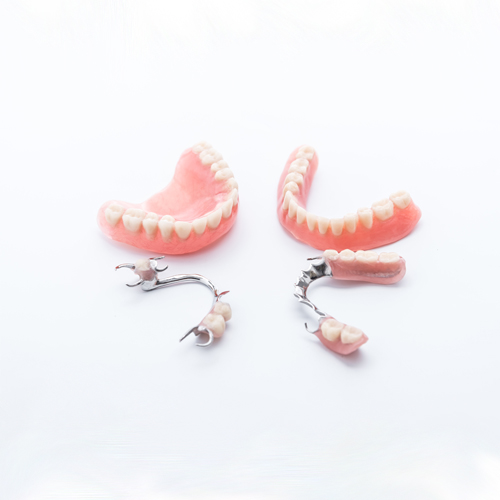
If you are missing one or more teeth/ molars, you can have a partial denture, or partial denture, also called a plate denture.

This is made entirely of gum-coloured plastic, in which artificial teeth are anchored. The plate denture rests on the mucosa of the mouth. However, the partial denture can be fitted with small metal “anchors”. These are metal brackets around your own teeth/ molars. This is only possible if the dentist has checked whether your own teeth/ molars are suitable for this. The anchors ensure a firmer hold, but they may be visible with e.g. smiling.

A partial denture is chosen if:

  • Your own tooth(s)/ molars cannot be restored by a filling
  • Temporary emergency provision
  • Precursor to a full denture
  • It is not possible to have a bridge or frame denture made due to financial circumstances

Frame prosthesis

A frame denture is also a partial denture and is therefore only possible if you still have your own teeth and these teeth are sturdy enough to “carry” the frame.

This partial denture consists of a precisely tailored cast metal frame to which “plastic saddles” with artificial teeth are attached. The frame denture rests mainly on the remaining teeth and sometimes more or less on the mucosa. The frame denture can be attached with clamps or a type of clasp. A clasp is usually on the inside of the teeth and is therefore not visible like the clamps.

Full denture

Dentures

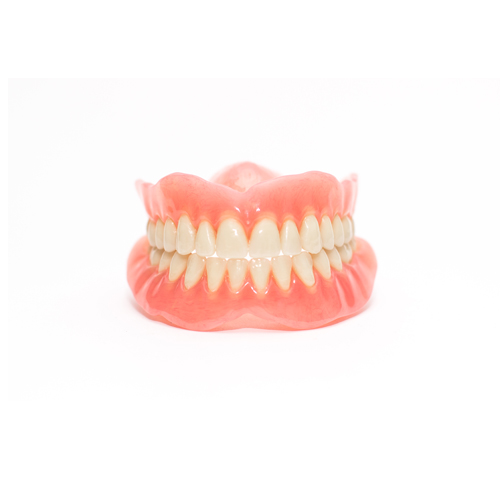
Full dentures or dentures serve to replace your full set of teeth. Full dentures may be chosen if all your teeth have been lost or cannot be saved. Dentures lie loose in the mouth and fall under removable appliances. The denture sucks into the mouth (retention) through the layer of saliva between the plastic of your dentures and your gums. The dentures rest completely on your gums.

Various materials are available for dentures. You can choose between plastic teeth and molars or porcelain teeth and molars.

All options are discussed with the patient to avoid making the wrong choice.

If teeth still need to be pulled, this is called an “immediate prosthesis”, which is a temporary emergency prosthesis.

With the immediate denture, we start making the dentures before your teeth are out. At the time the teeth are pulled, it is already ready. The dentures will be placed over the extraction wounds in your mouth immediately after extraction.
When the extraction wounds have healed properly and the gums have shrunk, a new definitive denture will be made. This healing process takes about 3 months on average.

Of course, dentures will never be able to match healthy teeth of your own, but with today’s modern technology, knowledge and skills, we will approach functionality and aesthetics as closely as possible. It can be made to look very much like your natural teeth, which you had. For this, you can bring old models or photos so that this can be best imitated. It is also possible to make it even more beautiful than it was before, for example by making the position straighter or adjusting the colour of the teeth.

Overdenture

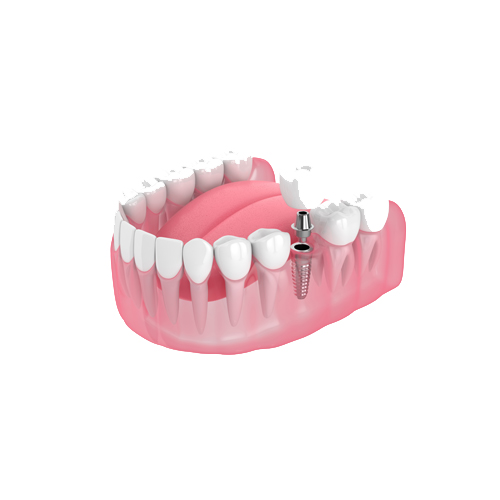
If some of the roots of your teeth can be preserved, an overdenture can be made. Because the roots act like pillars, this gives hold and support. The pressure created by chewing is largely absorbed by the pillars, so the jaw shrinks less quickly and fits properly for longer. These pillars can also be made with implants. You can remove the overdenture from the mouth.

Clicking teeth

Sometimes, problems may persist in the functionality of your denture. Then there are alternatives possible if your jawbone allows it, namely ” click dentures”.

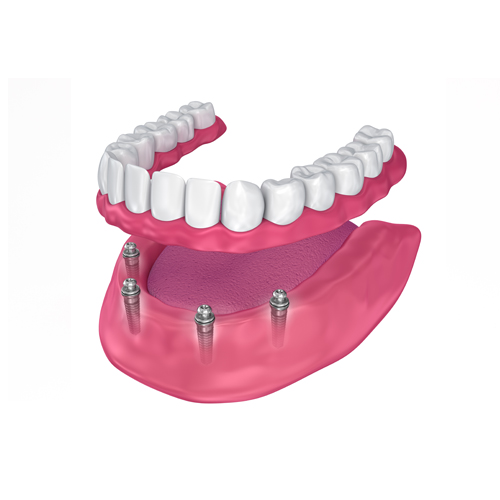
A click denture is clicked onto implants in your jaw. A bar is placed on the implants, to which the teeth click into place. With click dentures, you can take the denture in and out yourself, but gives more security when wearing it. The palate remains free, giving you more taste experience. You also have no pressure on the gums.

All-on-4 or all-on-6

You can also choose to have your dentures fixed to your implants. This is called an ” all-on-4 denture. It is fixed in your mouth and cannot be removed by you.
Regularly, this should be checked and the implants cleaned by your dentist.
Advantage of this:

  • Restoration of the jawline
  • Permanent natural-looking denture
  • Smaller gumline
  • Precise connection
  • The molars make a natural sound when chewing
  • No pain because there is no pressure on the gums
  • Natural construction with regard to eating, laughing and talking
  • Minimal risk of fracture and good adjustment if fracture does occur
  • No palate plate
  • No need to take it off at night
  • Gives more self-confidence

It is also possible to have a full bridge made of zirconium and attached to implants. This usually requires 6 implants and is called all-on-6.

Step-by-step plan for making a prosthesis:

  • First impression: plaster models are made from this impression on which a precisely fitting impression tray is made.
  • Second, final impression in the impression tray made especially for you
  • Bite determination. A wax bite plate is used to determine the position of “natural” close bite
  • Fitting in wax. A prosthesis made of wax to see if the bite position, shape and colour are right
  • Placement of your prosthesis
  • Follow-up check. If necessary, a follow-up check by your prosthodontist will take place after a few weeks

These steps precede an intake interview with the dental prosthetist / dentist.

Repairs

For repairs, such as fracture/tear/fallen tooth/teeth, to your existing dentures, you can also contact our prosthodontist. He can also perform rebasing if your current one has become too loose. I.e. he will fill the space created by the shrinking of your jaw, making it fit better again.

A prosthetic .....en then?

A new one always takes some getting used to and will not always feel comfortable right away. It feels different in your mouth, but your upper lip may also be a little fuller and your face a little less sunken. Eating and talking may also be a bit uncomfortable at first. Your mouth needs some getting used to, but this is usually over after a few days.

Wearing a prosthesis may cause discomfort at first due to pressure spots. The dentist or dental prosthetist can easily remedy this.

The denture is cleaned after every meal. This can be done with a denture brush and denture gel to remove food particles and prevent plaque and tartar. If you clean your denture and the mucosa on which it rests (jaws, palate and the transition from the jaw to the cheek) daily, you will prevent annoying inflammations. You can massage your mucous membranes with a soft toothbrush and regular toothpaste.

It is also important to visit your dentist regularly for a periodic check-up to keep your dentures and any implant system in good condition. Your dentist can tell you at what interval this is best for you.

Periodic check-ups with dentures

If you have dentures, it is important to visit your dentist at least once every 24 months to have your jawbone and denture checked. The jaw can start shrinking and this happens very imperceptibly and you will not notice it at first. This can cause the denture to become uncomfortable. The dentist or the prosthodontist can make small adjustments so that the wearing comfort remains good.

Want to know more?

Do you have any questions and want to know more about the possibilities? If so, please contact us. We will be happy to answer your questions, possibly in our practice during an intake interview with a dentist or prosthodontist. We can also help you with other treatments, such as veneers.

Would you like to make an appointment directly to have dentures fitted or repaired? Then you can also contact us. It is also possible to fill in the appointment form on our website.

Table of contents

Contactgegevens